Step 1: Simple Search
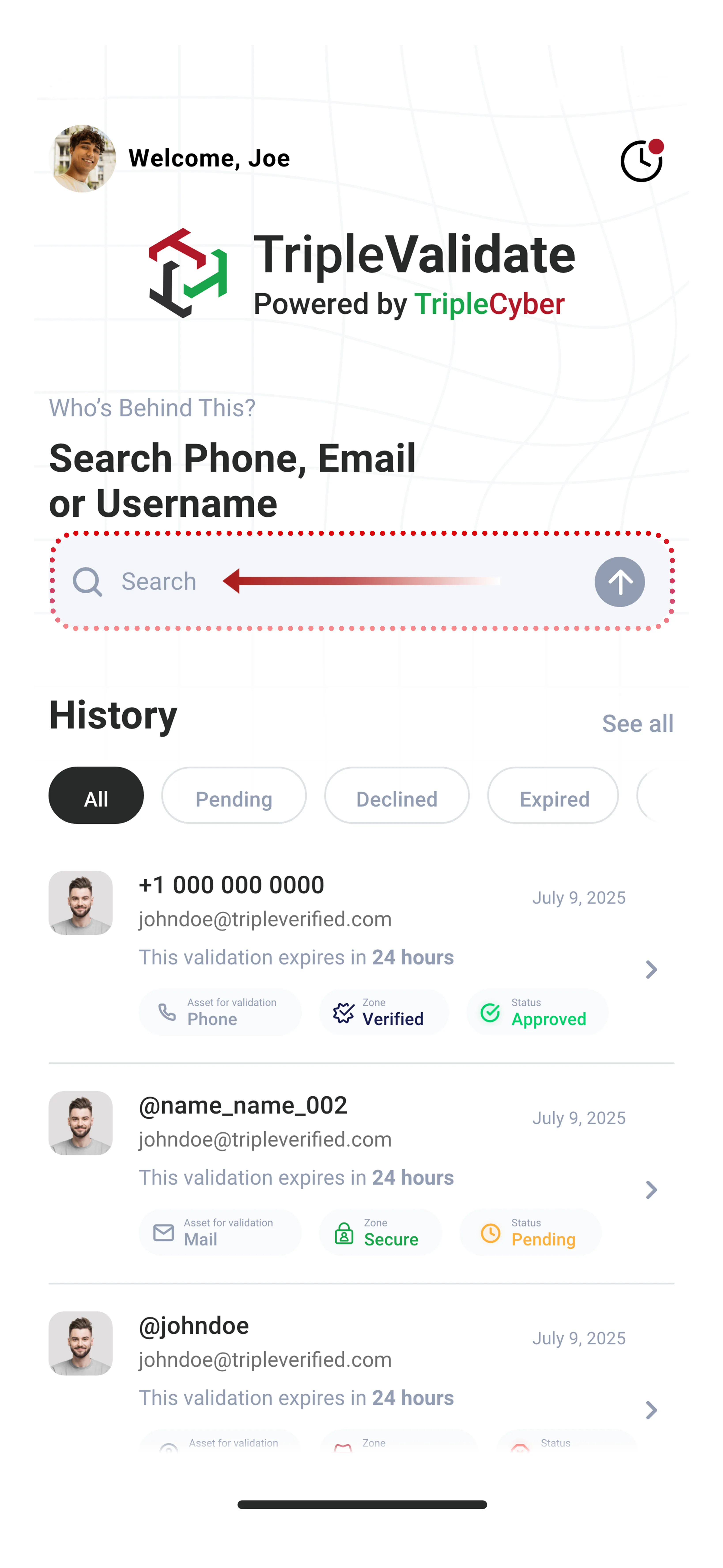
Enter any digital asset into the intuitive search bar: email addresses, phone numbers, usernames, social media handles, or domains.
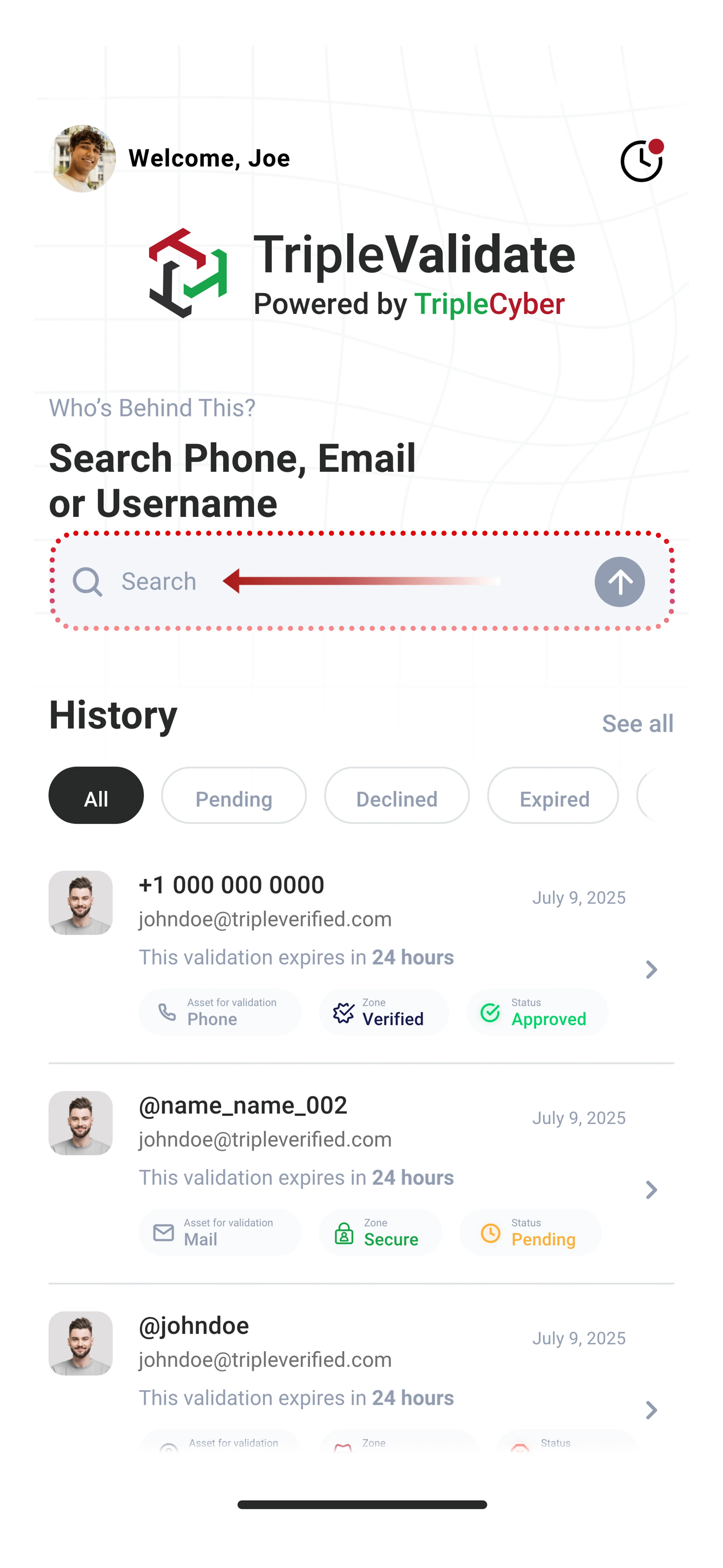
For detailed search instructions and tips, see Searching for Identities.
Step 2: Real-Time Verification
TripleValidate instantly checks against the secure TripleEnable database.
What Happens Behind the Scenes
Instant Database Query:
- Searches millions of verified identities
- Checks all linked assets across zones
- Matches against TripleEnable accounts
- Returns results in milliseconds
Security Protocols:
- Encrypted connection to database
- Zero Trust verification for search request
- Your search activity is logged for security
- Privacy-protected results
What Gets Checked:
- Is this asset registered in TripleEnable?
- Which zone is the account in? (Verified or Secure)
- What's their current ZTRS score?
- Are they active and verified?
- What other assets are linked? (if visible)
Loading Time
Typical Response:
- Results appear in 1-3 seconds
- Faster than any manual verification
- Real-time, not cached data
Step 3: View Results
See comprehensive information about the asset and its owner.
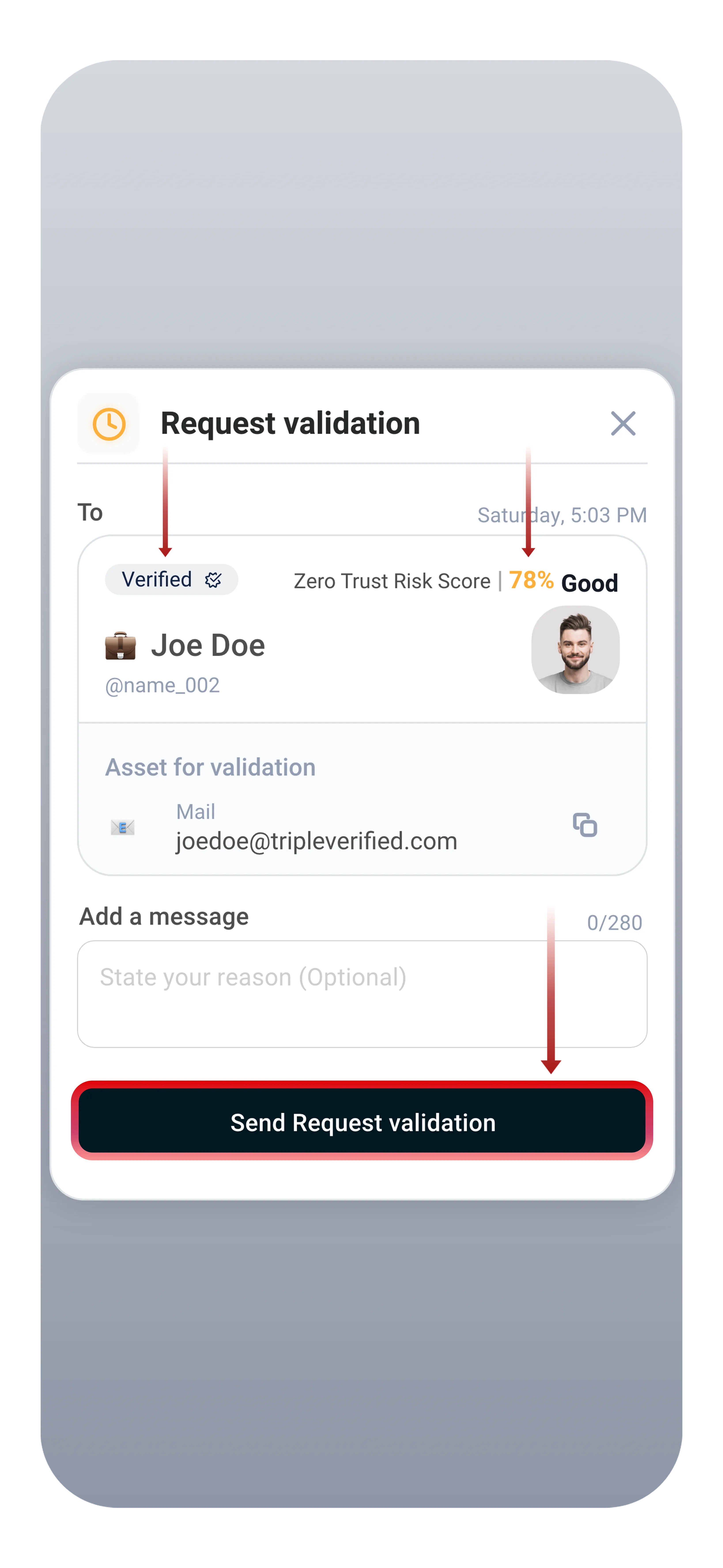
What Results Show
If Asset Is Found:
User Information:
- Username in TripleEnable/Helloii
- Zone level (Verified or Secure)
- Account status (Active, Inactive)
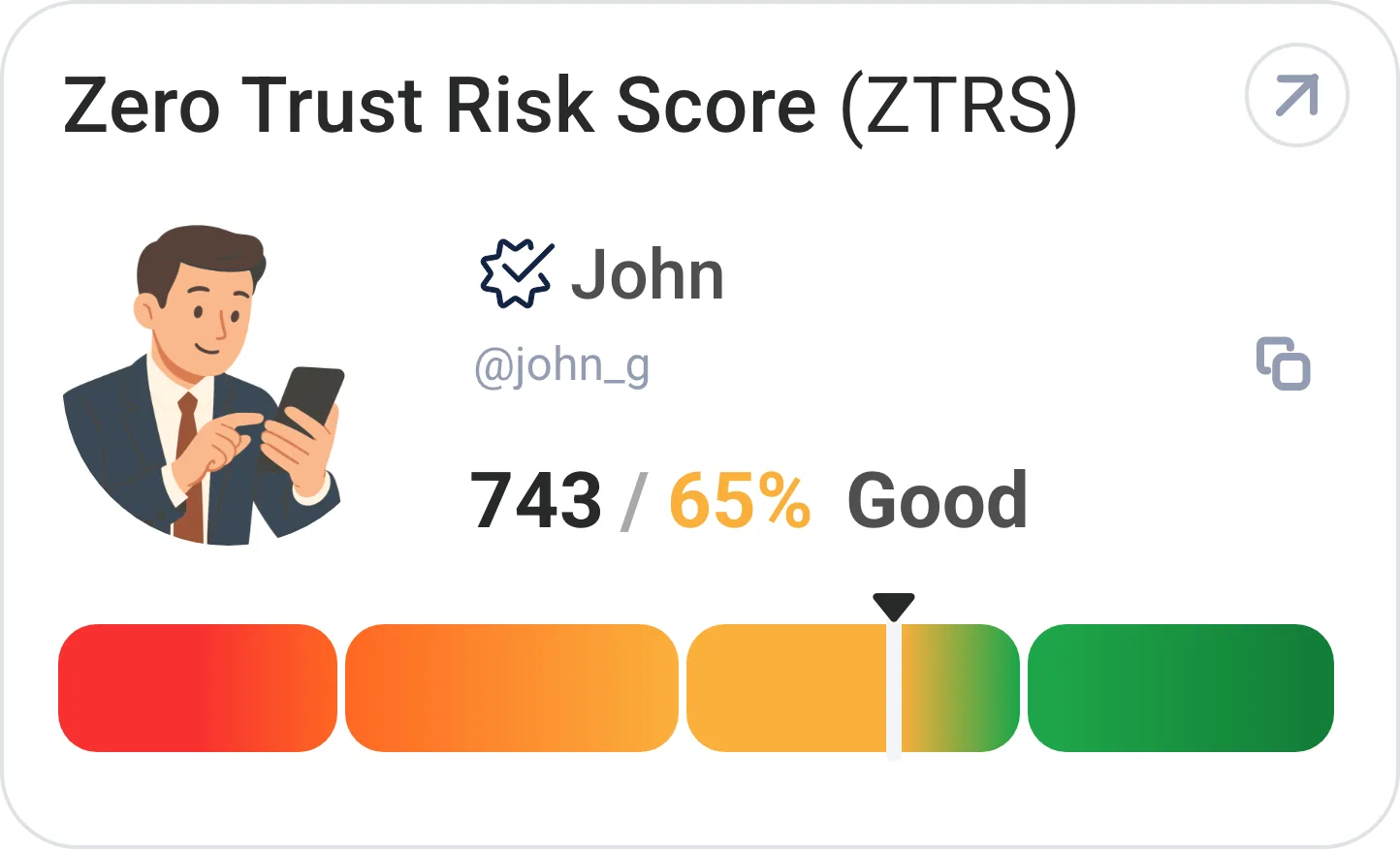
ZTRS Score:
- Current trust score (0-1000)
- Visual indicator (4-segment color bar: red/orange/yellow-green/green)
- Score trend (if available)
Verified Assets:
- List of linked assets (if privacy allows)
- Verification status for each
- Asset types (email, phone, social media)
Account Details:
- Account age (if visible)
- Last activity timestamp
- Zone badges and indicators
If Asset Is NOT Found:
Possible Reasons:
- Not registered in TripleEnable
- Privacy settings set to "Only me"
- Anonymous Zone user (cannot be found)
- Asset not added to their account
- Typo in your search
What This Means:
- Cannot verify through TripleValidate
- May be legitimate but not in ecosystem
- Could be suspicious (proceed with caution)
- Consider requesting they create account
Understanding the Results
Great ZTRS Score (750-1000):
- Highly trustworthy
- Government ID verified (if Secure)
- Multiple verified assets
- Established account history
- Safe to proceed with confidence
Good ZTRS Score (500-749):
- Moderately trustworthy
- Basic verification completed
- Some assets verified
- Building trust score
- Proceed with normal caution
Fair ZTRS Score (250-499):
- Lower trust level
- New account or minimal verification
- Few verified assets
- Limited history
- Exercise extra caution, validate further
Poor ZTRS Score (0-249):
- Lowest trust level
- Unverified or very new account
- Minimal verified assets
- No established history
- Do not proceed without additional verification
Privacy Considerations
What You Can See Depends On:
- Their privacy settings
- Your relationship (contact vs. stranger)
- Their zone level
- Which assets they've made public
Anonymous Zone Users:
- Will NEVER appear in searches
- This is by design for their privacy
- If you need to verify them, they must upgrade zones
Step 4: Send Validation Request
Ask the owner to confirm ownership of the asset.
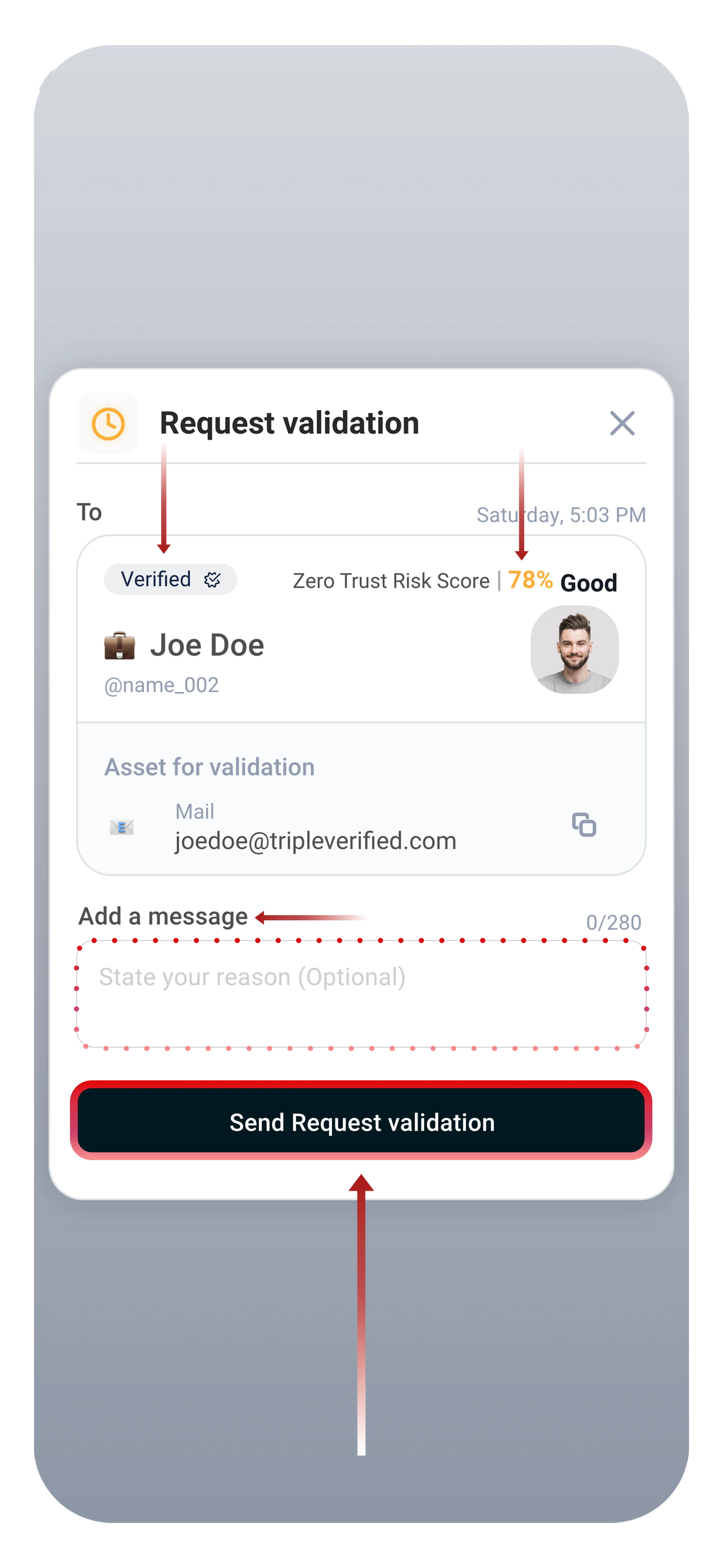
When to Send a Validation Request
Critical Situations:
- Received unexpected money request
- About to send wire transfer
- Suspicious email or message
- Business transaction with new contact
- High-value purchase or sale
Precautionary Situations:
- Verifying new business partner
- Confirming client communication
- Validating contractor information
- Double-checking before sharing sensitive data
How to Send a Validation Request
- After viewing search results, tap "Send Request validation"
- Write your message to the user:
- Be specific about what you're verifying
- Explain the context
- Keep it professional and clear
- Review the request details
- Tap "Send Request validation"
- Request is delivered to their TripleEnable account
Example Validation Messages
Money Request Verification:
"Hi, I received an email from yourname@gmail.com asking me to wire ,000. Can you confirm this email belongs to you and you sent this request?"
Business Communication:
"Hello, I received a contract from this email address. Can you verify this is your official business email before I sign?"
Social Media Verification:
"Hi, someone claiming to be you contacted me on Instagram from this handle. Can you confirm this is your account?"
General Verification:
"I want to confirm I'm communicating with the real you. Can you verify this is your email address?"
What Happens After Sending
Recipient Receives:
- Push notification on their device
- Email to their TripleEnable email
- In-app notification in TripleEnable
- Your validation message
They Can Respond:
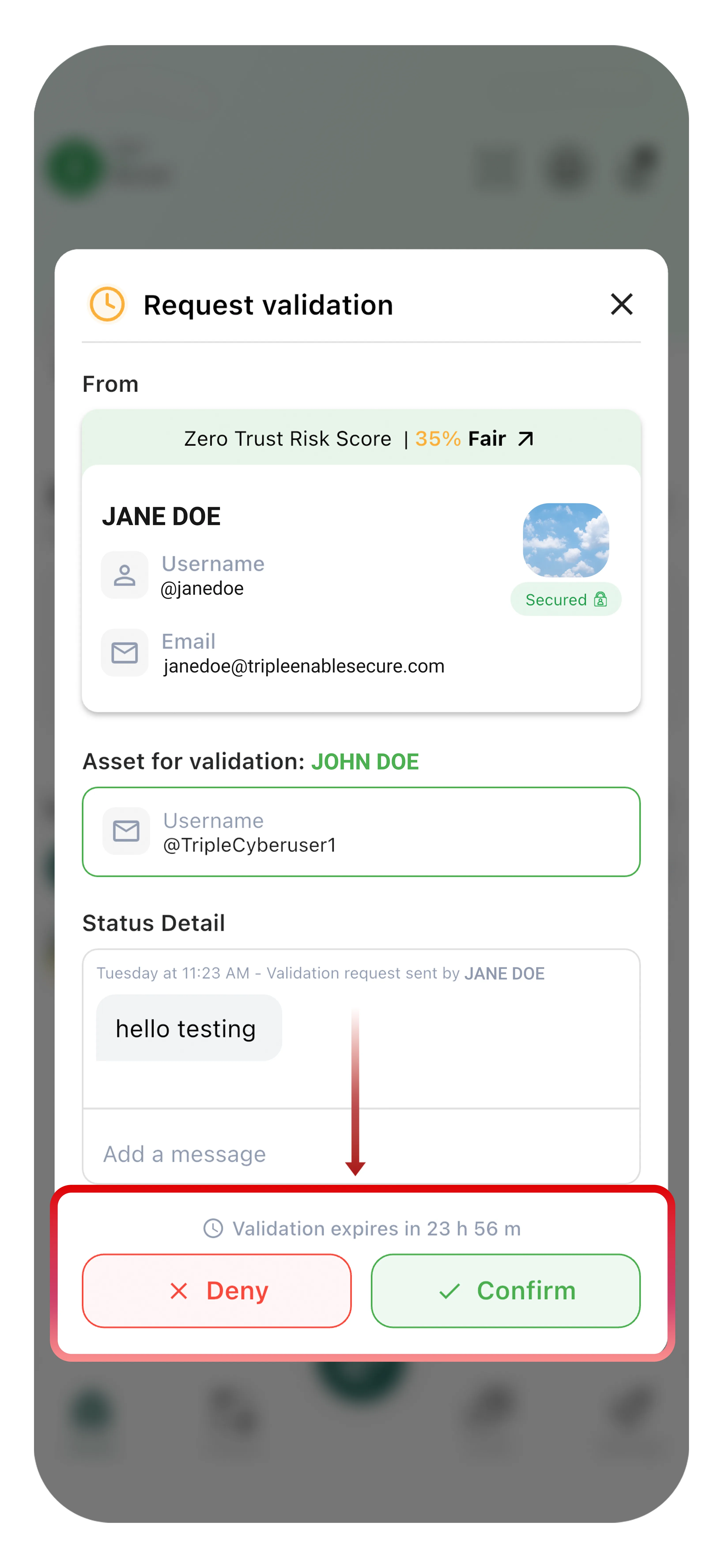
- Confirm - Confirms the asset is theirs
- Deny - Denies ownership (RED FLAG!)
- Ignore - No response (expires after 24 hours)
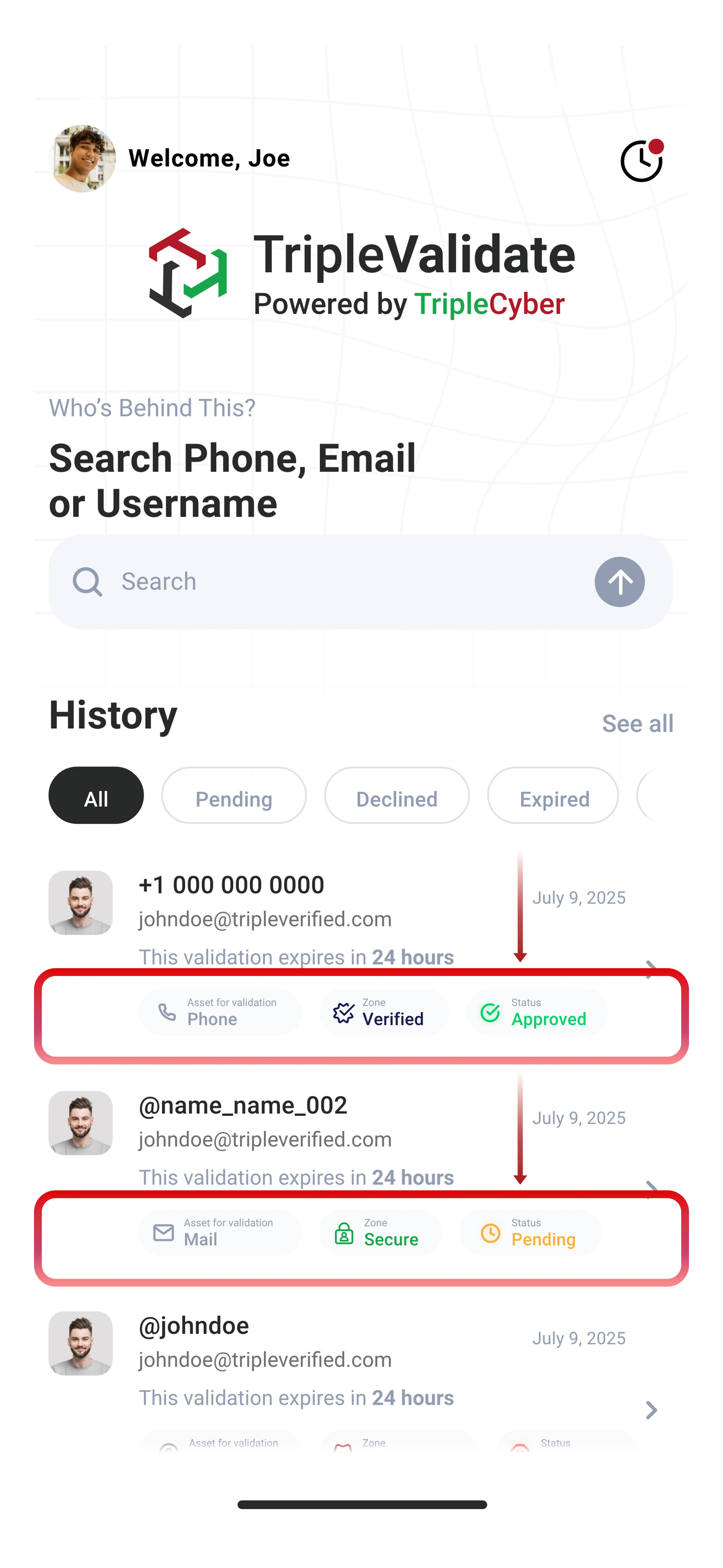
You Get Notified:
- Instant push notification when they respond
- Email notification
- In-app update with their answer
Response Timeline
24-Hour Window:
- Requests expire after 24 hours
- Most users respond within a few hours
- Urgent requests often get faster responses
What If They Don't Respond:
- Could be busy and missed notification
- Could be suspicious (they're avoiding)
- Could be legitimate but not checking TripleEnable
- Proceed with extreme caution if no response
Complete Process Example
Scenario: You receive an email from "john.smith@company.com" requesting a 0,000 wire transfer.
Step 1: Search
- Open TripleValidate
- Search: "john.smith@company.com"
Step 2: Verification
- TripleValidate checks database
- Results appear in 2 seconds
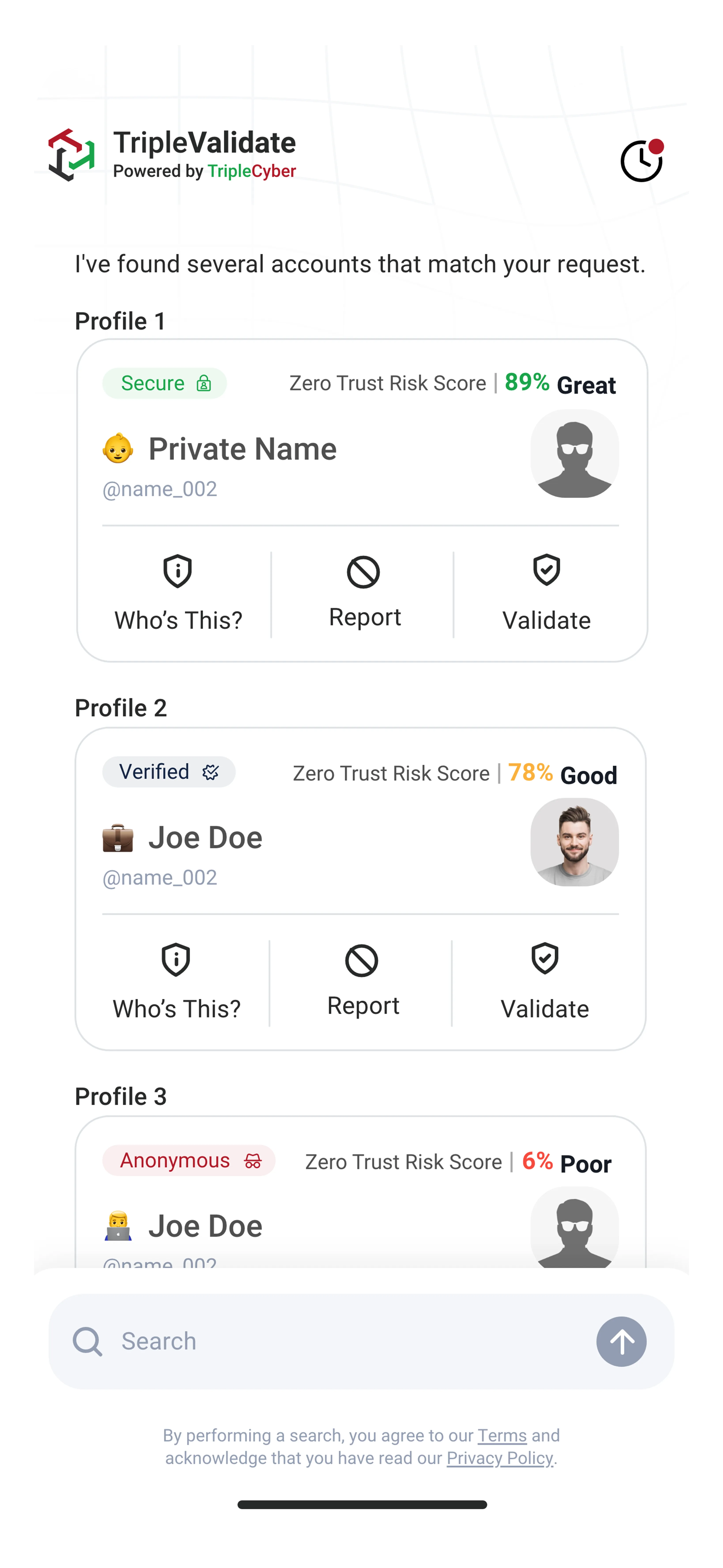
Step 3: View Results
- Found: John Smith, Verified Zone, ZTRS: 780
- Review their ZTRS score, zone level, and verified assets
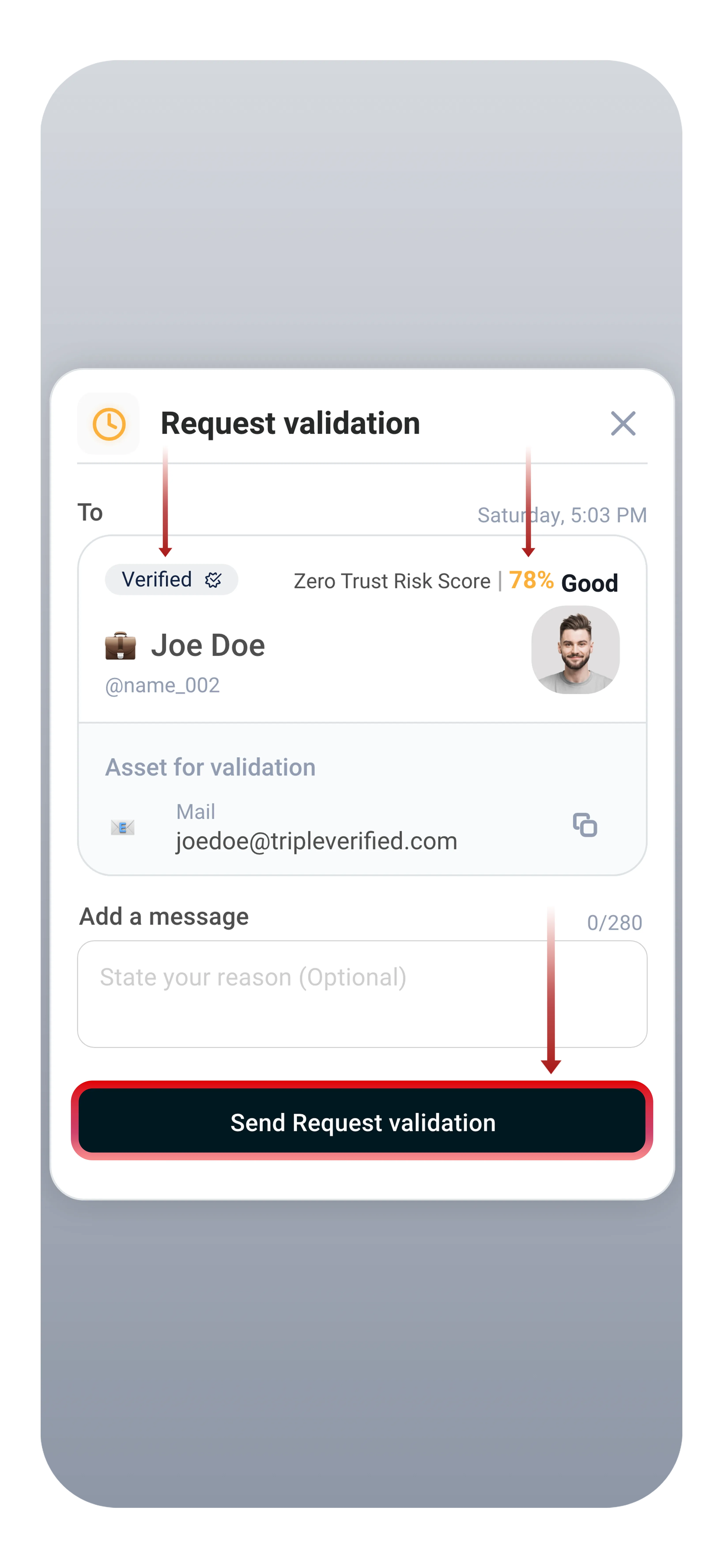
Step 4: Send Validation Request
- Fill out validation request form with your message
- Tap "Send Request validation"
- Recipient receives your request and chooses to Confirm or Deny ownership
Result:
- Confirmed - Safe to proceed with transfer
- Denied - SCAM! Do not send money, report email
- No Response - Contact John through known channels before proceeding
Why This Process Works
Speed
- Entire process takes under 30 seconds
- Faster than calling, texting, or emailing
- Real-time verification vs. hours of back-and-forth
Accuracy
- Database of verified identities
- Continuous validation (not one-time)
- Government ID verification (Secure Zone)
- Blockchain-backed authenticity
Simplicity
- Just a search bar
- No complex setup
- No training required
- Works on any device
Security
- Zero Trust architecture
- Encrypted communications
- Audit trail of all validations
- Community reporting
Troubleshooting
Search Returns No Results:
- Check spelling and formatting
- Try alternative contact methods (phone vs. email)
- Search by username instead
- User may not be in TripleEnable ecosystem
Cannot Send Validation Request:
- Verify you have Secure Zone access
- Check internet connection
- User may have privacy set to "Only me"
- Try again in a few moments
Validation Request Failed to Send:
- User account may be inactive
- Privacy settings blocking requests
- Technical issue - try again
- Contact support if persists
Next Steps
Now that you understand the 4-step process:
- Anti-Phishing Use Cases - Real-world scenarios and detailed examples
- Searching for Identities - Advanced search techniques
- Sending Validation Requests - Best practices and strategies
